Hidden Monthly Fees of Template Platforms Nobody Warns You About
Shopify says $39 a month. Your credit card statement says $200. Here's where the rest of that money is going.
 Custom vs TemplatesNo. 13
Hidden Monthly Fees of Template Platforms Nobody Warns You About
Aug 2026
The Advertised Price Is Not the Real Price
Shopify says $39 per month. Wix says $17. Squarespace says $16. Those numbers are on every pricing page, in every comparison article, and in every sales pitch. They are also fiction.
Not lies — fiction. The same way a car advertisement says "starting at $28,000" when the average buyer drives off the lot at $42,000 after options, fees, and dealer add-ons. The advertised price gets you in the door. The real cost of website platforms is what you discover after the door closes behind you.
This article does the math that template platforms hope you never do. We are going to tally every fee, every app subscription, every transaction percentage, and every workaround cost that turns a $39/month plan into a $150–$300/month ongoing expense. For the full three-year cost comparison between Shopify and a custom build, our hub article Custom Website vs Shopify: The Real Cost Over 3 Years has the complete breakdown.
The App Tax — Paying for Features That Should Be Free
Template platforms ship with a core feature set. Anything beyond that core requires an app, a plugin, or a third-party integration — and almost all of them charge monthly.
Here is what a typical small business Shopify store installs within the first six months, with real pricing from the Shopify App Store:
Email marketing (Klaviyo, Omnisend, Mailchimp): $0 free tier → $20–$60/month once you pass the subscriber threshold. And you will pass it.
Product reviews (Judge.me, Loox, Yotpo): $0–$15/month for basic text reviews. Photo reviews, video reviews, Google Shopping integration: $19–$49/month.
SEO tools (SEO Manager, Plug in SEO, Smart SEO): $20–$40/month. Shopify's built-in SEO capabilities handle the basics, but structured data, bulk meta-tag management, and image alt-text automation require paid apps.
Upsell and cross-sell (ReConvert, Bold Upsell, Frequently Bought Together): $5–$30/month. These features are native to most custom e-commerce builds but require paid plugins on Shopify.
Loyalty and rewards (Smile.io, LoyaltyLion, Rise.ai): $49–$199/month for anything beyond the most basic stamp-card program.
Shipping and fulfilment (ShipStation, Shippo, Easyship): $0 free tier → $10–$50/month depending on order volume. Shopify has built-in shipping labels, but multi-carrier rate comparison and international shipping rules usually need an app.
Backup and security (Rewind Backups, Locksmith): $3–$39/month. Shopify does not offer native store backup — if something breaks, you rely on whatever version history the platform provides.
Pop-ups and lead capture (Privy, Justuno, OptinMonster): $0 free tier → $15–$70/month for advanced targeting and A/B testing.
Add those up. On the conservative end, a store running the basics — email, reviews, SEO, upsell, and shipping — is spending $80–$150/month on apps alone. That is on top of the platform fee. And that is the conservative end.
Think of it like this: the platform is a stage. The apps are the instruments. The platform charges you rent for the stage and then charges you again for every instrument you need to play the song. A custom-built site gives you the stage and the instruments — because they were built together for the same performance.
Transaction Fees That Eat Your Margins
Every template platform with e-commerce takes a cut of every sale. Some are transparent about it. Some are not.
Shopify:
Credit card processing through Shopify Payments: 2.9% + $0.30 per transaction (Basic plan). Drops to 2.6% + $0.30 on the $79/month Grow plan.
Third-party payment gateway fee: an additional 2% on Basic, 1% on Grow, 0.6% on Advanced — on top of whatever the gateway charges. This is a penalty for not using Shopify Payments.
International transaction surcharge: +1.5% on Basic for international cards.
Squarespace:
Credit card processing: 2.9% + $0.30 (Basic and Core plans), 2.7% + $0.30 (Plus), 2.5% + $0.30 (Advanced).
Platform transaction fee: 2% on the Basic plan. Removed on Core and above.
Digital content and membership transaction fee: 7% on Basic, 5% on Core, 1% on Plus, 0% on Advanced.
Wix:
No platform transaction fee on paid plans (a point in Wix's favour).
Credit card processing through Wix Payments: 2.9% + $0.30 for US transactions. International transactions are higher.
Now do the math on a real store. Say you sell $10,000 per month through your Shopify Basic store using Shopify Payments:
Credit card processing: roughly $320 per month (2.9% + $0.30 across ~200 orders at $50 average)
If any of those are international cards: add another $150
If you use a third-party gateway instead of Shopify Payments: add $200 (2% surcharge)
That is $320–$670 per month in payment processing alone on a $10K/month store. Credit card fees exist on custom sites too — but the 2% third-party gateway penalty and the international surcharge are pure platform tax. They do not exist when you process payments through your own Stripe or Square integration on a custom build.
The Premium Theme Trap
Every platform offers free themes. Every free theme looks like every other free theme. Your customers can tell.
Premium Shopify themes cost $180–$350. Squarespace themes are all free (design is included in the platform fee — one of Squarespace's genuine advantages). WordPress premium themes cost $40–$200, but the good ones (Astra Pro, GeneratePress Premium, Kadence Pro) require annual renewals of $50–$100/year.
But the theme purchase is not the real cost. The real cost is customisation.
You buy a $250 Shopify theme. It looks great in the demo. Then you realise: the demo uses professional photography you do not have. The layout does not quite work for your product categories. The mobile version truncates your product descriptions. The announcement bar does not support the feature you need. Now you need a Shopify developer to customise the theme — and Shopify developers charge $100–$200/hour working within the constraints of Liquid, Shopify's proprietary templating language.
A mid-range theme customisation project: 10–20 hours of developer time. That is $1,000–$4,000 to make a $250 theme look and function the way you need. And the result is a customised rental — you still do not own it, you still cannot take it with you, and the next Shopify platform update might break the customisations. What You Actually Own When Your Website Is Built From Scratch explains why that distinction matters more than most business owners realise.
The Developer Bill for Things the Platform Cannot Do
Here is the irony of hidden fees Shopify Wix Squarespace owners do not see coming: eventually, most growing businesses end up paying for custom development anyway. The difference is that they pay for it on top of platform fees rather than instead of them.
Common custom development requests on template platforms:
Custom product pages that go beyond the theme's default layout: $500–$2,000
Integration with a CRM or ERP (HubSpot, Salesforce, NetSuite): $1,000–$5,000
Custom checkout modifications (Shopify restricts checkout customisation to Plus plans at $2,300/month): workarounds cost $500–$3,000
Product configurators or quote calculators: $2,000–$8,000 on platforms, often with ongoing maintenance as platform updates break the integration
Migration between platforms when you outgrow your current one: $1,000–$5,000 depending on data complexity
Every one of these features exists natively in a custom build. You are not paying a developer to work around platform constraints — you are paying them to build exactly what the business needs, with no constraints at all.
Engine8 sees this pattern constantly: a business starts on Shopify or Wix, grows, hits the platform ceiling, pays a developer to hack around it, hits the next ceiling, pays again — and eventually realises they have spent more on platform fees plus workarounds than a custom build would have cost from the beginning. Run your current site through our free site evaluation to see where your setup stands on speed, mobile experience, and SEO — it takes under 60 seconds and shows you exactly what the platform is and is not delivering.
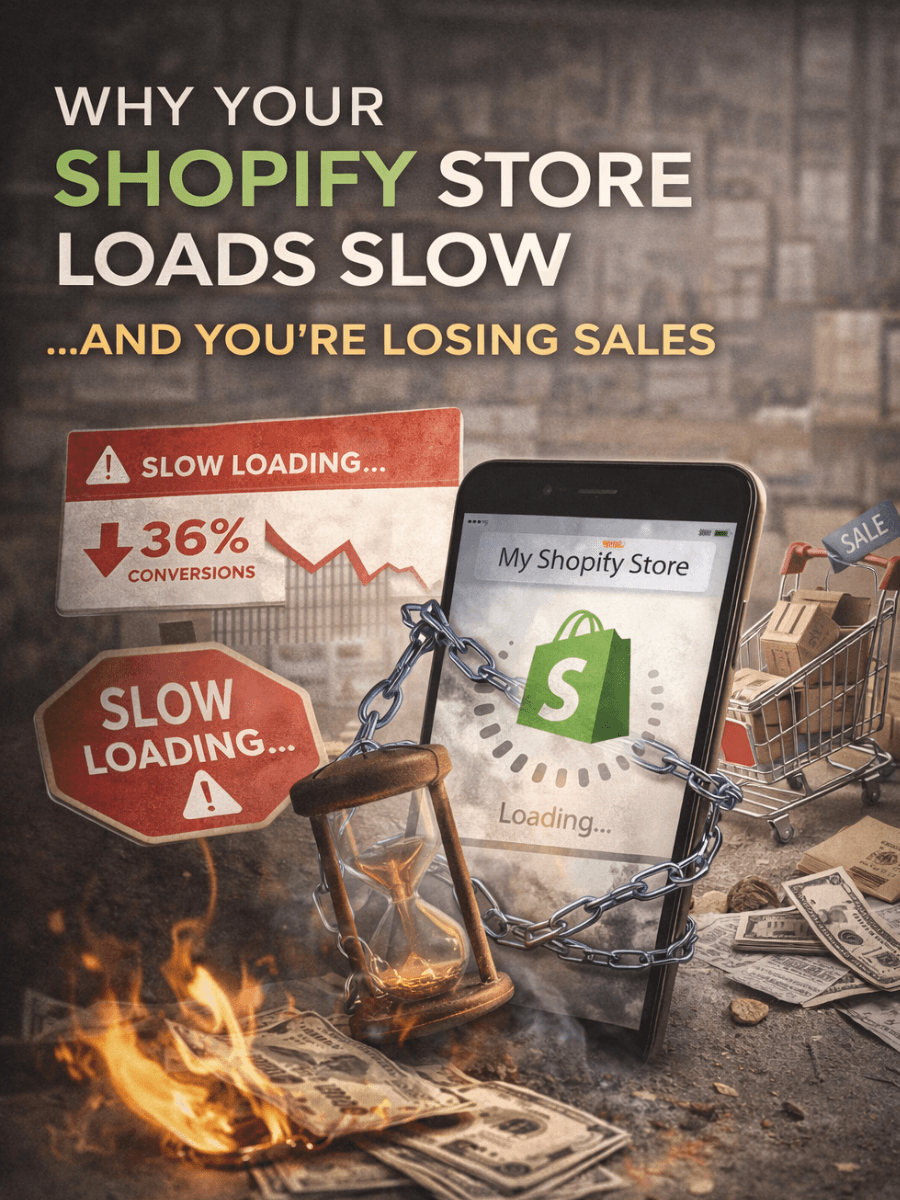
Each of those apps and customisations also injects additional JavaScript, which compounds the performance problem we cover in Why Your Shopify Store Loads Slow and What It's Doing to Your Sales.
Fun Facts
The average Shopify store installs 6–8 apps. Power users often run 15–25 apps simultaneously. Each one is a recurring monthly charge that compounds with every feature gap the platform cannot fill natively.
Shopify generated over $2 billion in revenue from its subscription and merchant solutions in a single quarter. A significant portion comes from the app ecosystem and Shopify Payments — meaning the platform is financially incentivised to keep features behind the app paywall.
WordPress powers 43% of all websites but has over 60,000 plugins in its directory. The average WordPress site uses 20–30 plugins, each one a separate vendor, a separate update cycle, and a separate potential security vulnerability.
Shopify themes built with Liquid cannot run outside the Shopify ecosystem. Every dollar spent customising a Liquid theme is locked to the platform — zero portability if you ever migrate.
Squarespace does not charge platform transaction fees on its Core plan and above, making it the most transparent e-commerce pricing of the major platforms. The trade-off is significantly fewer features and a much smaller integration ecosystem.
Adding It All Up — the Real Monthly Number
Let us build a realistic annual cost for a Shopify store doing $10,000/month in revenue. Not a power user — just a normal small business with normal needs:
Line ItemMonthly CostAnnual CostShopify Basic plan$39$468Premium theme (amortised over 2 years)$12$144Email marketing (Klaviyo, 1,000+ contacts)$30$360Product reviews (Judge.me Pro)$15$180SEO app (Plug in SEO)$30$360Upsell app$15$180Shipping app$10$120Backup app$9$108Credit card processing (2.9% + $0.30)~$320~$3,840Total~$480~$5,760
That is $5,760 per year to run a basic Shopify store. Over three years: $17,280 — and that does not include any custom development, any theme customisation, or any increase in app pricing as your subscriber lists and order volumes grow.
Now compare that to a custom-built site:
Line ItemMonthly CostAnnual CostCustom build (amortised over 3 years, $10K project)$278$3,333Hosting (Vercel Pro)$20$240Database (Neon, Supabase, or PlanetScale)$0–$25$0–$300Email service (Resend, Postmark)$0–$20$0–$240Credit card processing (Stripe: 2.9% + $0.30)~$320~$3,840Total (Year 1)~$638~$7,653Total (Years 2–3, build paid off)~$360~$4,320
Three-year total for the custom build: roughly $16,293. Three-year total for Shopify: $17,280 — and growing every year as app prices increase and your subscriber lists expand. The custom build is less expensive by year three, and it gets cheaper every year after that while Shopify stays the same or increases.
And the custom build comes with one thing Shopify never will: you own it. When a $500 Website Is Fine (And When It's Costing You Money) helps you figure out where on this spectrum your business actually sits. And for the side-by-side of all four major platforms, Wix, Squarespace, WordPress, Shopify — An Honest Comparison for Business Owners lays out the full picture.
Think of it like this: Shopify is a gym membership where every machine costs extra. The treadmill is $15/month. The weights are $20/month. The locker is $9/month. The towels are $5/month. You signed up for $39, but you are paying $150 because you need to actually use the gym. A custom build is a home gym — you pay more upfront, but after that, every workout is free.
The Engine8 Approach
Engine8 builds custom websites and web engines for businesses that are tired of the template website monthly fees treadmill. No app subscriptions. No platform transaction penalties. No proprietary lock-in. Every project ships with full code ownership, sub-second performance, and a site that does exactly what your business needs — without paying a monthly fee for each feature.
If the math in this article made you pull up your credit card statement, or if you are starting to wonder whether the platform fees are worth what you are getting — start a conversation. We will run the numbers on your specific setup, show you what a custom alternative looks like, and give you an honest comparison so you can make the decision with real data. No pitch decks. No filler. Just engineering.
Your move
Want leads from content like this?
Get a custom web engine with built-in SEO, analytics, and conversion systems.
Explore related keywords
Your move
Turn this strategy into a production-ready growth engine.
We design, build, and ship custom systems that combine SEO, conversion architecture, and operations automation into one platform.